Long Sleeve Wedding Gown Singapore: Best Fits 2026
Best overall: unlined openwork sleeves. Best for changing between ceremony and reception: detachable sleeves. Best for full coverage indoors: lightweight opaque sleeves. For a long sleeve wedding gown in Singapore in 2026, choose the sleeve construction around your outdoor exposure, coverage preferences and movement—not the fabric name alone.
- For a long sleeve wedding gown Singapore shortlist, start with unlined openwork sleeves for outdoor portions.
- Detachable sleeves suit brides who want ceremony coverage and a different reception look; confirm how they attach.
- Lightweight opaque sleeves suit full-coverage preferences, but lining and underarm fit still need checking.
- Carte Blanche offers designer wedding gowns for rent or purchase; confirm each gown’s sleeve construction before choosing.
Why this matters
Long sleeves do not all feel alike. Open lace, lined lace, fine mesh and densely embellished fabric create different amounts of coverage and different sensations against your skin. A photograph cannot tell you whether an apparently sheer sleeve has a second layer underneath.
Carte Blanche is a bridal boutique for brides comparing designer wedding gowns for rent or purchase. Start with Carte Blanche, then ask about the construction of the specific gown rather than assuming a designer name guarantees a comfortable sleeve.
For your 2026 wedding, separate the day into outdoor and indoor portions. A brief walk between sheltered spaces calls for a different shortlist from an outdoor ceremony followed by garden portraits. Choose for the parts when you will actually wear the gown, not only the room where you try it on.
What makes the best long-sleeve wedding gown?
Use these criteria before falling for a neckline or a particular photograph:
- Sleeve construction: Check whether the sleeve is openwork, mesh-backed, lined or made from several layers. Look inside as well as outside.
- Underarm comfort: Raise your arms and reach forward. Notice pulling, scratchy seams and any restriction where the sleeve joins the bodice.
- Required coverage: Decide whether you want visual coverage, opaque coverage or simply the outline of a long sleeve. These are different needs.
- Whole-gown comfort: Assess the bodice, skirt lining and train alongside the sleeves. Changing sleeves does not change the rest of the dress.
- Transitions: If you want detachable sleeves, check the fastenings, the appearance without them and whether you can remove them comfortably.
- Fit and alterations: Ask which sleeve adjustments are possible on the exact gown, especially before an overseas purchase or rental commitment.
A useful shortlist makes these trade-offs visible. Your preferred option should satisfy your coverage needs without asking you to tolerate a sleeve that already feels restrictive at the fitting.
Long-sleeve wedding gowns at a glance
These are construction options, not named gowns or claims about current inventory. Use the ranking to assess individual dresses; an actual gown can combine several of these features.
| Rank and option | Best for | Standout feature | Key limitation |
|---|---|---|---|
| 1. Unlined openwork sleeves | Outdoor portions with decorative coverage | Open spaces between lace motifs | Not opaque; seams and motifs still need a comfort check |
| 2. Detachable long sleeves | Ceremony-to-reception changes | Coverage can be removed | Attachment design and the sleeveless finish need checking |
| 3. Fine illusion sleeves | A sheer, continuous sleeve outline | Mesh supports the visual sleeve shape | Mesh, appliqués and cuffs can still feel restrictive |
| 4. Lightweight opaque sleeves | Full coverage at an indoor celebration | Continuous fabric coverage | Fabric weight alone does not establish comfort |
| 5. Densely embellished sleeves | An indoor, detail-led bridal look | Visible texture and decoration | Decoration can add weight or create skin contact points |
1. Unlined openwork sleeves: best for outdoor wedding portions
Unlined openwork sleeves use lace with visible spaces between its motifs, without an opaque sleeve lining. They offer a decorative long-sleeve outline while leaving parts of the arm uncovered. This is the first construction to inspect when you want long sleeves for outdoor portions of a Singapore wedding.
Check the entire arm, not just the wrist. A sleeve can look open near the cuff while carrying denser appliqué around the shoulder and upper arm. Hold it against your skin and inspect the inside seam before deciding how it feels.
Unlined openwork sleeves pros:
- Open spaces leave less continuous fabric covering the arm.
- Lace provides detail without requiring a fully opaque sleeve.
- The pattern can connect visually with a lace bodice or skirt.
Unlined openwork sleeves cons:
- Openwork does not meet a requirement for opaque coverage.
- Lace edges, seams or embellishments can irritate sensitive areas.
- Close-fitting lace still needs adequate room at the elbow and underarm.
Best for: Brides who want decorative arm coverage during outdoor vows or portraits, rather than complete opacity.
For a 2026 celebration, assess this option with the undergarments you intend to wear. An open sleeve does not solve discomfort from a tightly fitted bodice or layered skirt.
Verdict: Buy only after checking the actual sleeve is unlined and comfortable in motion.
2. Detachable long sleeves: best for ceremony-to-reception changes
Detachable long sleeves let you change the gown’s coverage without necessarily changing the whole dress. Their usefulness depends on the attachment system and whether the gown looks finished with the sleeves removed. Do not assume an off-shoulder detail or separate accessory is detachable unless that is confirmed.
This option suits a wedding with distinct settings: a ceremony where you want coverage, followed by a reception where you prefer bare arms. It also lets you choose different looks without making either one your permanent choice.
Detachable long sleeves pros:
- You can remove the sleeve coverage between events.
- One gown can support different styling preferences across the day.
- Sleeve removal gives you a choice if the coverage becomes uncomfortable.
Detachable long sleeves cons:
- Fastenings need checking for comfort and security.
- Removing sleeves does not reduce the bodice or skirt’s layers.
- You need somewhere to keep the sleeves after removal.
Best for: Brides who want a covered ceremony look and an uncovered reception look.
At the fitting, inspect both versions. Ask someone to show you the removal process, then check whether attachment points remain visible or uncomfortable against your skin. Plan who will help you change if the fastening is difficult to reach.
Verdict: Buy if both versions feel complete and the change is practical; skip if only the sleeved version works.
3. Fine illusion sleeves: best for a sheer sleeve outline
Illusion sleeves use sheer mesh to create a continuous sleeve shape, sometimes with lace motifs or other decoration attached. The result differs from openwork lace: mesh covers the spaces between the decorative elements. Sheer appearance alone does not establish how the sleeve will feel.
Look closely at the shoulder, elbow and cuff. These areas reveal whether the mesh stretches comfortably, whether decoration catches against your skin and whether the sleeve follows your arm without pulling the bodice.
Fine illusion sleeves pros:
- Mesh supports a continuous outline from shoulder to wrist.
- Applied motifs can create detail without an opaque base.
- Sheer coverage suits brides who want a visible sleeve without solid fabric.
Fine illusion sleeves cons:
- Sheer mesh does not provide opaque coverage.
- Mesh colour and visibility need checking against your skin.
- Appliqués, cuffs and seams can restrict movement or feel scratchy.
Best for: Brides who prefer a sheer, uninterrupted sleeve shape rather than the open spaces of lace alone.
Check the sleeve in daylight as well as under fitting-room lighting. You are assessing your own preference, not searching for a supposedly universal skin-tone match. Take photographs of the arm bent and relaxed if photography is permitted.
Verdict: Hold until you have checked mesh appearance, skin contact and elbow movement.
4. Lightweight opaque sleeves: best for full coverage indoors
Lightweight opaque sleeves provide continuous coverage without relying on sheer mesh or open lace. They are the relevant starting point when opacity matters more than showing skin through a decorative pattern. Ask about the lining, because the outer fabric is only part of the construction.
For an indoor 2026 wedding, keep the outdoor journey in the decision. Arrival, transfers and portraits still happen somewhere, even when the ceremony and reception are indoors. Choose a sleeve you can tolerate during those transitions.
Lightweight opaque sleeves pros:
- Continuous fabric answers a preference for opaque arm coverage.
- An undecorated surface gives a clear, simple sleeve outline.
- You can assess fit without lace motifs obscuring the seam shape.
Lightweight opaque sleeves cons:
- Opaque fabric covers the whole arm continuously.
- Extra lining changes the construction you are evaluating.
- A fitted cuff or narrow elbow can restrict an otherwise simple sleeve.
Best for: Brides prioritising opaque coverage for a mainly indoor celebration.
Do not treat words such as satin, crepe or chiffon as comfort ratings. Ask to handle the actual sleeve and see its inner layers. If you want a looser sleeve, inspect how that volume behaves when you reach across a table or carry flowers.
Verdict: Buy for a full-coverage preference only after checking lining and movement; skip if outdoor wear already feels uncomfortable.
5. Densely embellished sleeves: best for an indoor, detail-led look
Densely embellished sleeves put beads, sequins, embroidery or closely arranged motifs at the centre of the design. Choose them because you genuinely want that detail—not because a photograph makes the underlying mesh look weightless. Decoration and its placement affect what you feel against your arm.
An indoor fitting should include ordinary movements, not just a standing pose. Check the inside of the elbow and the underarm, where decorated fabric can fold or press against another part of the gown.
Densely embellished sleeves pros:
- Decoration makes the sleeves a visible part of the bridal look.
- Sleeve details can echo embellishment elsewhere on the gown.
- A distinctive sleeve can carry the styling without extra arm accessories.
Densely embellished sleeves cons:
- Embellishment can add weight to the sleeve.
- Raised details can create uncomfortable contact points.
- Alteration questions need addressing around the decorative pattern.
Best for: Brides choosing an indoor, detail-led look who have checked comfort on the exact gown.
Your preference for embellishment is valid. The decision is whether this particular construction works for your day, not whether a minimal dress is inherently better.
Verdict: Hold until the movement check feels comfortable; skip for extended outdoor wear if the sleeve feels heavy or irritating.
Check the sleeve before committing
Use 3 movement checks at your fitting: reach forward as if hugging someone, bend your elbow as if lifting a glass, and sit with your arms resting naturally. These are practical checks, not a substitute for advice about the gown’s fit.
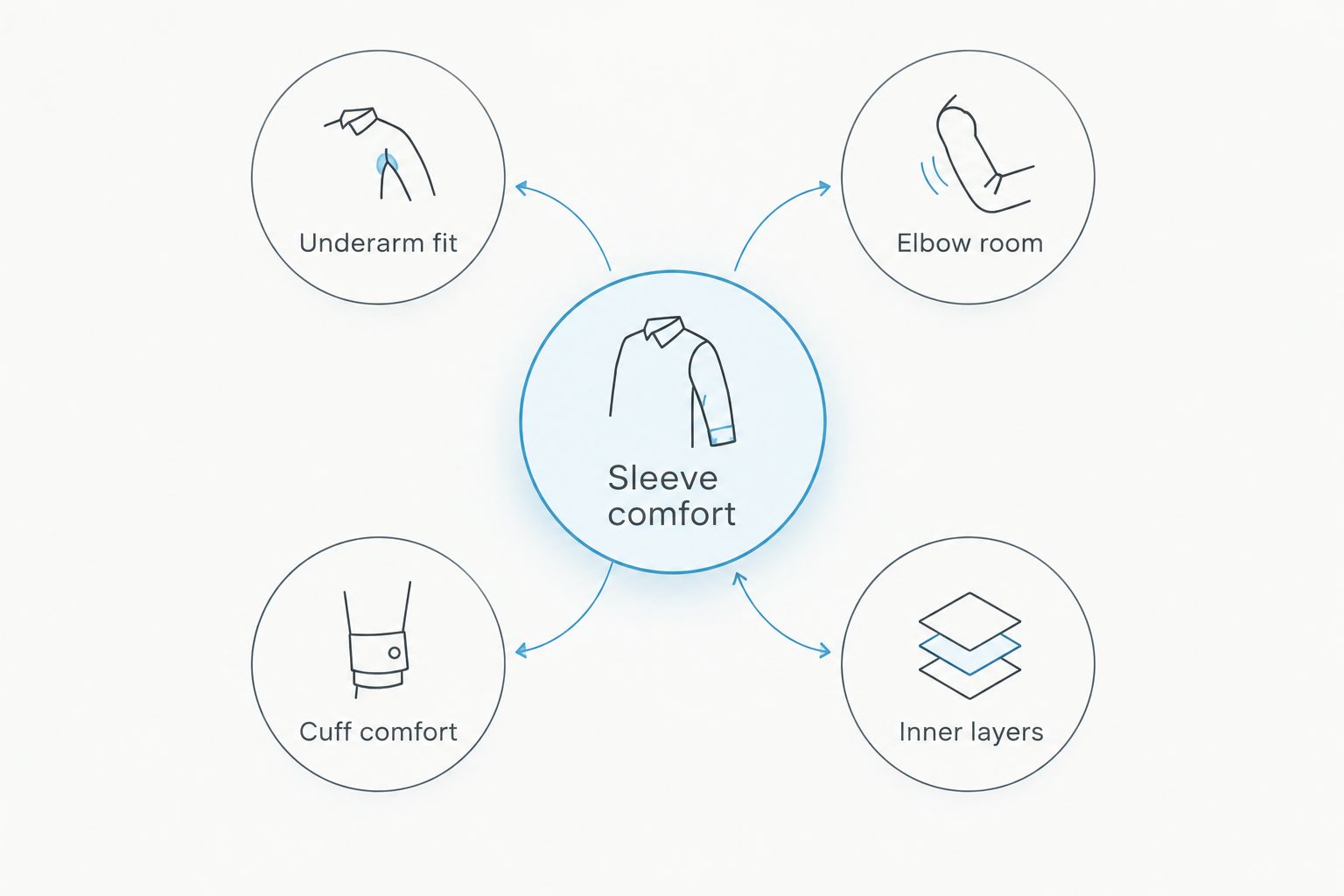
Then inspect these four areas:
- Underarm fit: Notice whether raising your arm pulls the bodice upward.
- Elbow room: Check whether bending produces pressure or tightness.
- Cuff comfort: Check the closure and how it feels against your wrist.
- Inner layers: Look for lining, backing and decoration touching your skin.
For overseas shopping, ask Carte Blanche for the information you need about the specific wedding gown before choosing. Request sleeve measurements, inside views and clarification of any proposed alterations. Worldwide shipping is offered, but that does not establish delivery timing, customs outcomes or a fit guarantee.
Buying versus renting: decide around the actual gown
Carte Blanche offers designer wedding gowns for rent or purchase. Neither route automatically solves the sleeve question: both require a comfortable construction and clear terms for the exact dress.
For a 2026 decision, compare the whole commitment rather than only the gown itself. Ask which alterations are permitted, who arranges them, whether sleeves or accessories are included, and what cleaning or return responsibilities apply. Get those answers before choosing.
Purchase suits the wish to keep the gown, subject to confirming what alterations are feasible. Rental suits a wish to wear and return it, subject to the rental terms. For a designer sample-sale purchase, ask about the individual gown’s condition and measurements rather than treating the original design as proof of its present fit.
How the options are ranked
This order prioritises sleeve construction, movement and the ability to match coverage to the setting. It is a construction-based buying guide, not a wear-test result or a ranking of designer collections. No fabric label earns a comfort verdict without examining the actual gown.
Which long-sleeve wedding gown should you choose?
Start with unlined openwork sleeves if you want decorative coverage for outdoor portions; start with lightweight opaque sleeves if full coverage is non-negotiable. Choose detachable sleeves when changing coverage between events is part of your plan.
For 2026, bring your ceremony, portrait and reception settings into the fitting conversation. Your best gown is the one that meets your coverage preference and feels comfortable through the movements your day requires. You do not need to abandon long sleeves—or accept discomfort to keep them.
FAQ
What's the best long sleeve wedding gown for Singapore's humid climate?
Start by inspecting gowns with unlined openwork sleeves if you want decorative coverage for outdoor portions. Check the actual sleeve, bodice and skirt construction before deciding; the sleeve type alone does not establish whole-gown comfort.
Are lace sleeves cooler than satin sleeves?
A fabric name alone does not establish which sleeve feels cooler. Compare the actual layers, openness, fit and decoration rather than treating lace or satin as a comfort rating.
Should I choose detachable sleeves for my wedding?
Choose detachable sleeves if you want coverage for one part of the wedding and bare arms for another. Confirm the attachment method and check that the gown feels finished and comfortable with the sleeves removed.
Can I wear opaque long sleeves for an outdoor ceremony?
Opaque long sleeves provide coverage, but you still need to assess their comfort for your outdoor plans. Inspect lining and fit, and include transfers and portraits when deciding how much outdoor wear the gown involves.
Can I rent or buy a designer wedding gown from Carte Blanche?
Carte Blanche offers designer wedding gowns for rent or purchase. Confirm the options and terms for the specific gown rather than assuming every design is offered through both routes.
How do I check long-sleeve gown fit when shopping overseas?
Request measurements and inside views of the exact gown, including its sleeves. Ask about lining, cuff closures and feasible alterations before committing; photographs alone do not establish fit.
Does Carte Blanche offer worldwide shipping?
Carte Blanche offers worldwide shipping. Confirm the arrangements for your destination and wedding date directly; shipping availability does not establish delivery timing or customs outcomes.
One last thing
A sleeve that feels fine with your arm straight can feel different when your elbow bends. Before choosing, take your favourite standing pose—and then leave it. Your gown needs to work when you hug, sit and celebrate, not only when you face the mirror.