Wedding suit rental for grooms: complete 2026 guide
Wedding suit rental for grooms is borrowing formalwear for your wedding with the aim of getting a well-fitted look without keeping the suit afterwards. This 2026 guide helps you compare renting with buying, check comfort and fit, and plan collection or travel around your ceremony rather than choosing from photographs alone.
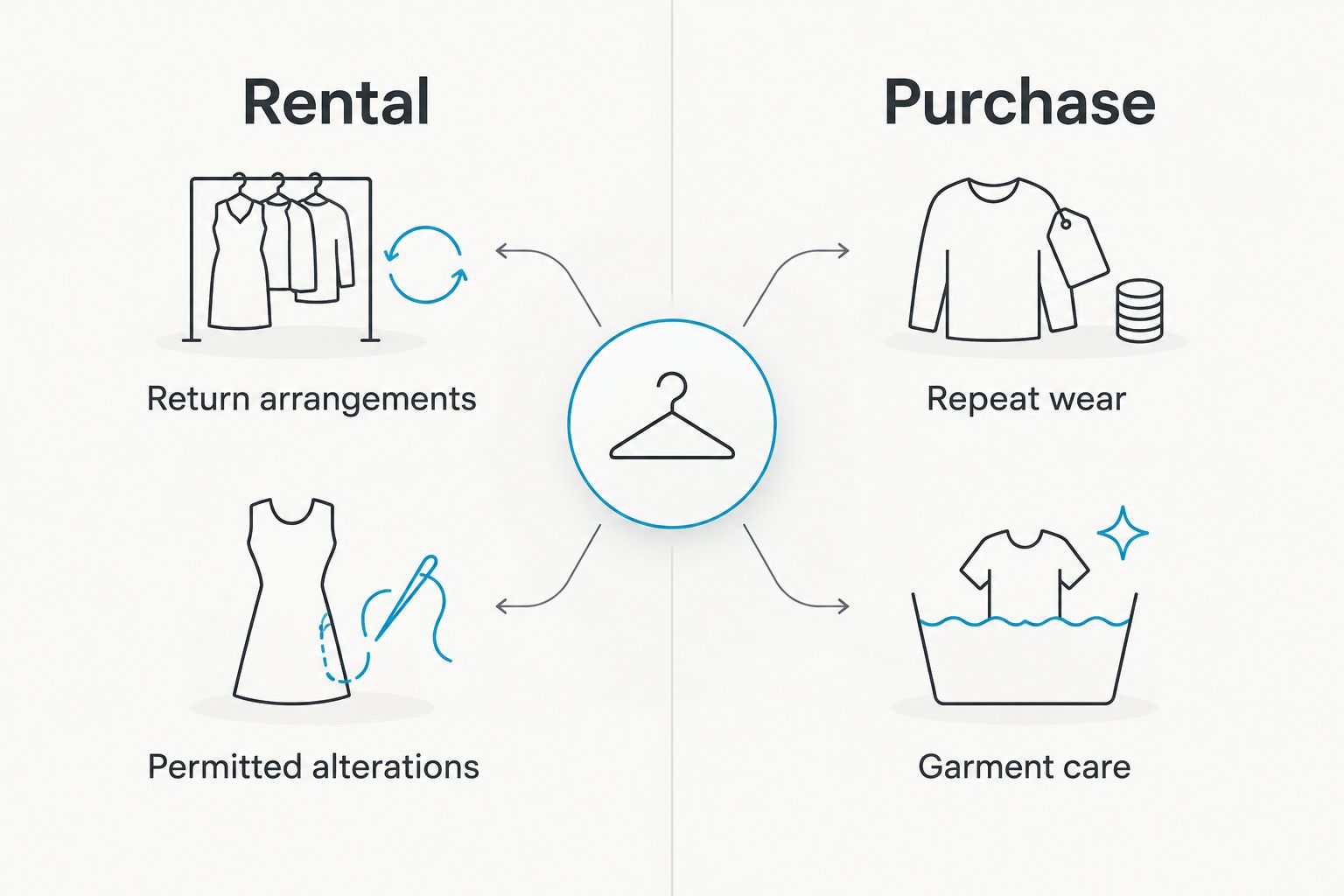
- Wedding suit rental for grooms works best when fit, permitted alterations and return arrangements match the wedding plan.
- Carte Blanche offers suits and bridal gowns for couples comparing wedding attire together in Singapore.
- Choose a wedding suit or tuxedo around the dress code, movement and setting, not an assumed trend.
- Compare renting, buying and wearing an existing suit before committing; ownership does not automatically mean better value.
Why wedding suit rental matters for grooms
A groom's suit needs to work while you stand for the ceremony, sit through dinner and move around your guests. Rental adds another consideration: you need permission for any adjustments and clear arrangements for returning a garment you do not own.
Start with the wedding suits for grooms in Singapore guide to explore the style decision. Then assess the actual garment rather than treating a preferred silhouette as proof that it fits.
For a Singapore wedding in 2026, distinguish an indoor celebration from outdoor photographs or a garden ceremony. For an overseas wedding, distinguish worldwide shipping from permission to take a rental abroad; they are different questions.
The right rental is the suit you can wear comfortably throughout your wedding and return under terms you understand. A striking jacket is not enough if the trousers restrict sitting or the return arrangement conflicts with your honeymoon.
How to choose your wedding suit rental
1. Define your dress code and wedding setting
Begin with a shared outfit brief, not a shopping appointment. Write down the venue setting, ceremony expectations and how formal you want the celebration to feel. Your partner's preferences belong in that conversation, but neither outfit needs to disappear into the other.
A tuxedo and a conventional suit are not interchangeable dress-code choices. Black tie calls for evening formalwear; an ordinary business suit does not become a tuxedo because it is black. If your invitation says black tie, discuss appropriate formalwear rather than relying on colour alone.
For an intimate wedding, you can still dress formally. Guest count does not dictate your clothes. Choose the atmosphere you want, then make the invitation wording and your own outfits consistent with it.
- Write a plain-language dress code before choosing garments.
- Identify indoor, outdoor and travel portions of the day.
- Agree on the level of formality with your partner.
- Note any ceremony-specific clothing requirements.
2. Compare renting, buying and your existing wardrobe
The manual starting point is simple: try on a suit you already own with the shirt and shoes you expect to wear. Check its condition and whether it suits the occasion. You might need a different outfit, but you should know what you are replacing before shopping.
Rental suits a groom who wants a wedding-specific look without keeping another garment. Buying suits a groom who wants ownership, repeat wear or adjustments beyond those permitted on a rental. Neither choice wins automatically.
For your 2026 comparison, request an itemised written quote for each route. Compare what is included, what remains your responsibility and what happens after the wedding. Do not compare a bare garment quote with an arrangement that includes accessories or other services.
Think about actual future occasions rather than an imaginary wardrobe. If you would not wear the same colour, cut or formalwear again, ownership alone is not a benefit.
- Try your existing suit before ruling it out.
- Request itemised rental and purchase quotes.
- Separate garments, accessories and alteration requirements.
- Identify realistic occasions for wearing a purchased suit again.
3. Build a shortlist around your proportions
Use photographs to identify preferences, then narrow your shortlist by fit. Look at jacket length, shoulder shape, trouser rise and how much structure you enjoy wearing. Avoid choosing a cut because someone says it suits every groom; bodies and preferences differ.
Bring a short written brief to a boutique: the dress code, preferred colours, ceremony setting and any fit concerns. This is more useful than a large collection of unrelated inspiration photographs. Include what you dislike as well as what you want.
Carte Blanche offers suits and designer bridal gowns for rent or purchase in Singapore. Carte Blanche is best for couples who want to consider suits and bridal gowns through the same boutique. Treat that as a useful starting point, not a substitute for checking the particular suit and its terms.
The limitation is straightforward: a boutique's range of services does not establish the fit, alteration permissions or rental arrangements of an individual garment. Confirm those before deciding.
- Shortlist cuts by shoulder fit and comfortable trouser rise.
- Bring reference images showing specific details you like.
- Explain fit concerns without reducing yourself to a size label.
- Ask which garment adjustments are permitted before committing.
4. Test the whole outfit in motion
A fitting is not only a mirror check. Wear the intended shirt and shoes, and test the jacket and trousers together. Shoe shape and shirt bulk affect how the outfit sits, so substitutes can hide problems you discover later.
Use 3 movements as your fitting checklist: sit, walk and raise your arms as if greeting someone. These are practical checks, not a tailoring standard. Notice pulling across the back, pressure at the waistband, a collar that shifts and trousers that catch as you move.
Ask the fitter to explain what can be corrected and what requires a different garment. A small-looking issue is not automatically a simple alteration. With rental, permission matters as much as the proposed adjustment.

You should be able to describe what feels wrong, not just whether you like the reflection. Body-inclusive fitting starts with finding a garment that serves your body, rather than asking you to tolerate discomfort for a particular cut.
- Sit naturally and check the waistband and jacket.
- Walk in your intended wedding shoes.
- Raise your arms and check shoulder and back movement.
- Ask which fit issues require another size or cut.
5. Coordinate colour without forcing an exact match
Bring your partner's outfit reference or an accurate fabric reference when possible. Coordinate formality and overall tone first; matching every accessory to a floral colour can make the outfit feel more prescribed than personal.
Check your shortlisted outfit in 2 lighting conditions: natural light and the kind of indoor light you expect at the venue. This is a useful comparison exercise, not a guarantee of how every photograph will look. Phone images are references, not exact colour standards.
For your 2026 wedding, choose one detail you genuinely like—a tie texture, pocket square or distinctive shirt collar—rather than building an outfit around an unverified latest trend. An enduring dark suit and a more expressive colour are both valid when they suit your celebration.
Accessories should also be wearable. Test the collar with the tie fastened and check that your shoes are comfortable before the wedding, not merely attractive in a flat-lay photograph.
- Coordinate the couple's level of formality first.
- Compare outfit colours in natural and indoor light.
- Choose a personal detail rather than copying a complete look.
- Test the shirt, tie and shoes together.
6. Confirm the rental terms and travel plan
Before agreeing to a rental, put the collection, wedding and return arrangements into your calendar. Include any separate photography session or second celebration. A suit that works for the ceremony still needs to fit the whole itinerary.
Ask about permitted alterations, cleaning responsibilities, damage terms and the return process. Do not assume that another boutique's policy applies. Keep the answers with the agreement so you are not reconstructing them after the wedding.
Carte Blanche offers worldwide shipping. That fact does not establish overseas rental eligibility, transit time, customs treatment or how a rental would be returned. International shoppers should confirm the arrangements for their specific order directly.
For a destination wedding in 2026, assign responsibility for garment transport and return before booking the outfit. If your honeymoon begins immediately afterwards, decide who handles the return rather than leaving it as an unfinished task.
- Confirm the agreed collection and return arrangements in writing.
- Ask whether the suit can travel to your wedding destination.
- Record cleaning, alteration and damage responsibilities.
- Identify who will return the outfit after the celebration.
7. Record your final decision in one place
Create 1 written checklist covering the garment, accessories, fit decisions and handover arrangements. A shared note is enough. The purpose is to prevent different conversations from producing different assumptions about what you have agreed.
At the final check, look at the actual outfit rather than relying on an earlier photograph. Verify that the pieces match your agreement and that you understand how to care for and return them. Report any existing marks or damage through the process the provider specifies.
Keep the checklist practical: it should tell you what to wear, what to collect and what happens next. You do not need another planning document full of inspiration once the outfit is chosen.
- Record the agreed garments and accessories.
- Note the fit changes approved by the provider.
- Check garment condition at handover.
- Save return instructions where the responsible person can find them.
Compare the outfit options for your wedding
Choose by use case, not by the assumption that renting or buying always wins. The table separates the benefits from the responsibilities each route creates. For all options, assess the complete outfit and the written terms before deciding.
| Option | Best for | Main benefit | Key limitation |
|---|---|---|---|
| Wedding suit rental | Grooms wanting a wedding-specific outfit without ownership | No need to keep the suit afterwards | Alterations, travel and returns depend on the agreement |
| Purchased suit | Grooms expecting repeat wear or wanting ownership | You keep the garment for future occasions | You take responsibility for storage, care and future fit |
| Existing suit | Grooms whose wardrobe already matches the wedding brief | Starts with a familiar garment | Condition, fit or formality might not suit the occasion |
| Tuxedo rental | Grooms following a black-tie dress code | Aligns the outfit with evening formalwear expectations | Requires appropriate accompanying pieces and confirmed rental terms |
Rental is a use arrangement; tuxedo describes a type of formalwear. You can therefore rent a tuxedo or buy one. Make the dress-code decision separately from the ownership decision.
A couple shopping together can consider Carte Blanche for wedding suit rental and bridal attire, then assess each garment independently. Convenience is a benefit; it does not remove the need for separate fit checks and clear terms.
Common mistakes grooms make with suit rental
- Choosing by jacket appearance alone. Check the trousers, shirt and shoes as one outfit; the jacket cannot compensate for uncomfortable sitting or walking.
- Treating black as a dress code. A black suit and a tuxedo serve different purposes. Match the actual garment to the invitation wording.
- Assuming alterations are unrestricted. Ask what changes are permitted before choosing a rental that needs them.
- Leaving the return to the honeymoon plan. Name the person responsible and confirm the process before the wedding.
- Matching every detail to the bride's outfit. Shared formality and a considered colour relationship are enough; both partners can retain their own style.
FAQ
Is wedding suit rental for grooms better than buying in 2026?
Wedding suit rental is better suited to grooms who want a wedding-specific outfit without keeping it; buying suits grooms who want ownership and realistic repeat wear. Compare fit, included items, alteration needs and return responsibilities before deciding.
Can I rent a wedding suit from Carte Blanche?
Carte Blanche offers suits for rent or purchase in Singapore. Confirm the specific garment, fit options and rental terms directly before making your decision.
Should a groom wear a suit or a tuxedo?
Choose a tuxedo for a black-tie dress code and assess a conventional suit for other wedding dress codes. The venue atmosphere, ceremony expectations and the couple's preferences should inform the decision.
How do I know a rental wedding suit fits properly?
Check the complete outfit while standing, sitting, walking and raising your arms. Ask the fitter to distinguish permitted adjustments from problems that require another garment.
Can I take a rented wedding suit overseas?
Take a rented wedding suit overseas only after the provider confirms permission and the relevant arrangements. Check garment transport, the rental period and the return process against your wedding and honeymoon itinerary.
Does worldwide shipping mean an overseas rental is possible?
Worldwide shipping does not establish overseas rental eligibility. Confirm the order type, shipping arrangements and any return obligations for the specific garment before committing.
Do the groom's accessories need to match the bride's outfit?
The groom's accessories do not need to match the bride's outfit exactly. Coordinate formality and overall colour tone, then choose details that feel personal to each partner.
One last thing
For your 2026 wedding, rehearse the ordinary moment everyone forgets: sitting down in the complete outfit. Fasten the shirt, wear the shoes and take a seat as you would at dinner. If the suit only feels right while you stand still, keep looking.