When does a sample-sale wedding gown beat renting?
A sample-sale wedding gown beats renting when the specific dress fits your alteration plan, its total ownership cost works for you, and keeping it solves a real need, such as celebrations on separate dates. Renting is the better choice when the agreed hire terms cover your plans and you prefer returning the dress to arranging storage, resale or ongoing care.
- For sample sale wedding dress vs rental, compare complete written quotes, not the gown alone.
- Sample-sale purchase is best for ownership and repeat wear; rental is best for a defined hire period.
- Carte Blanche offers wedding gown rental and purchase; assess the individual dress and terms before choosing.
- Overseas brides should confirm measurements, alteration feasibility and shipping arrangements before committing.
Why this matters
Your gown decision reaches beyond the ceremony. It affects fittings, travel, how freely you can change the dress, and what you need to organise after the wedding.
For your 2026 shortlist, separate wanting a particular designer from needing to own a particular gown. The sample-sale wedding gown guide is a useful next read if you are exploring purchase, but the decision still belongs to the individual dress. A designer name cannot establish condition, fit or the work required.
Choose the arrangement that supports your actual wedding, not the one that sounds like the better deal in isolation. You do not need to justify wanting a keepsake, and you do not need to keep a dress to make the day meaningful.
When does a sample-sale wedding gown beat renting?
A sample-sale purchase wins when ownership gives you something the rental arrangement does not, without creating fit, care or travel problems you cannot accept. Rental wins when its written terms cover everything you need and ownership adds responsibilities you do not want.
| Decision | Sample-sale purchase | Rental |
|---|---|---|
| Best for | Keeping the gown, repeat wear or an ownership-led alteration plan | Wearing a gown within an agreed hire period and returning it afterward |
| Main advantage | You retain the purchased dress | You avoid keeping the dress after its return |
| Main limitation | You take responsibility for condition, alterations and care under the purchase terms | Your plans must fit the hire terms, return deadline and permitted changes |
| Fit question | Can this exact gown be altered appropriately for you? | What fitting work is permitted and included? |
| Overseas question | How will delivery, local fitting and onward travel work? | How will collection, travel, return and any permitted overseas use work? |
| After the wedding | Keep, reuse or explore resale without assuming a buyer | Return it according to the agreement |
Neither column guarantees a lower total outlay. Ask for 2 written quotes, one for buying and one for renting, based on the same wedding plans. Comparing different services makes a headline comparison misleading.
Build a like-for-like total-cost comparison
For a purchase, request the gown amount plus any applicable alterations, repairs, cleaning, delivery, import charges, transport and storage arrangements. Include only items that actually apply to your order and destination. Keep optional preservation separate from work needed to wear the gown.
For a rental, request the hire amount, included fitting work, cleaning arrangements, collection or delivery requirements, and any agreed extension. Read the deposit, damage and late-return terms separately. A refundable deposit affects the money you need available, but it is not automatically a final expense.
Do not subtract an imagined resale return from the purchase total. Selling later is a possible next step, not money already recovered. Your decision should remain affordable without a future buyer.
Sample-sale purchase: best for keeping and repeat wear
Buying deserves serious consideration when you want the same gown for a ceremony, a later celebration or portraits on a separate date. Ownership removes the need to fit those occasions inside a rental period, although cleaning, repairs and transport still need planning.
It also suits a bride who wants to keep the actual dress rather than only photographs. That preference has personal value. It does not require a financial justification, but it should sit alongside an honest assessment of storage and care.
Buy only when the exact sample passes your condition and fit checks. Ask whether it has been tried on, altered, repaired or cleaned, and request details of any visible wear. Do not assume that a sample is unworn or that every mark can be removed.
Ownership is not proof that a proposed redesign is practical. Before committing, ask a qualified bridal alterations specialist to assess the construction, available fabric and intended changes. Buying an unsuitable sample does not turn it into a suitable starting point.
Rental: best for a defined wearing period
Renting makes sense when you want to wear a gown for the agreed occasion and return it afterward. It is particularly relevant when keeping, storing or selling the dress would feel like unfinished wedding administration.
The trade-off is contractual rather than emotional: your dates, travel and fitting needs must fit the agreement. Confirm the collection date, return deadline, permitted use and cleaning responsibilities. Do not treat an extension or a permanent alteration as included unless it is documented.
Rental can also be the more comfortable choice when you like the dress as offered and do not need major changes. Ask exactly how the fit will be adjusted. A general promise that a gown will fit is less useful than a clear description of the work permitted.
Choose rental when the written arrangement covers your complete itinerary. If you would spend the celebration worrying about the return journey or a prohibited change, revisit the arrangement before paying.
Why the better choice varies
For a 2026 wedding, these factors belong in the decision before you compare designer names:
- Exact condition: Inspect the hem, lining, closures, seams and embellishments. Ask which issues need attention before wearing and who is responsible for that work.
- Alteration feasibility: A size label is not a fitting assessment. Confirm what can be changed on the particular gown and whether that work is permitted under the agreement.
- Wedding itinerary: Include every planned wearing occasion, travel date and handover. A local ceremony and an overseas celebration create different practical requirements.
- Included services: Establish what each quote includes. Cleaning, fittings and transport should not remain assumptions on either side of the comparison.
- Life after the wedding: Decide whether you want to keep the dress, attempt resale or return it. Each choice brings different responsibilities.
- Written terms: Read payment, cancellation, return and damage provisions for the actual transaction. Do not transfer a policy from another boutique or another gown.
Your preferred silhouette matters too, but it cannot settle these questions. Choose the shape you enjoy wearing, then test whether the particular dress works for your body and plans.
How to compare the exact gowns before committing
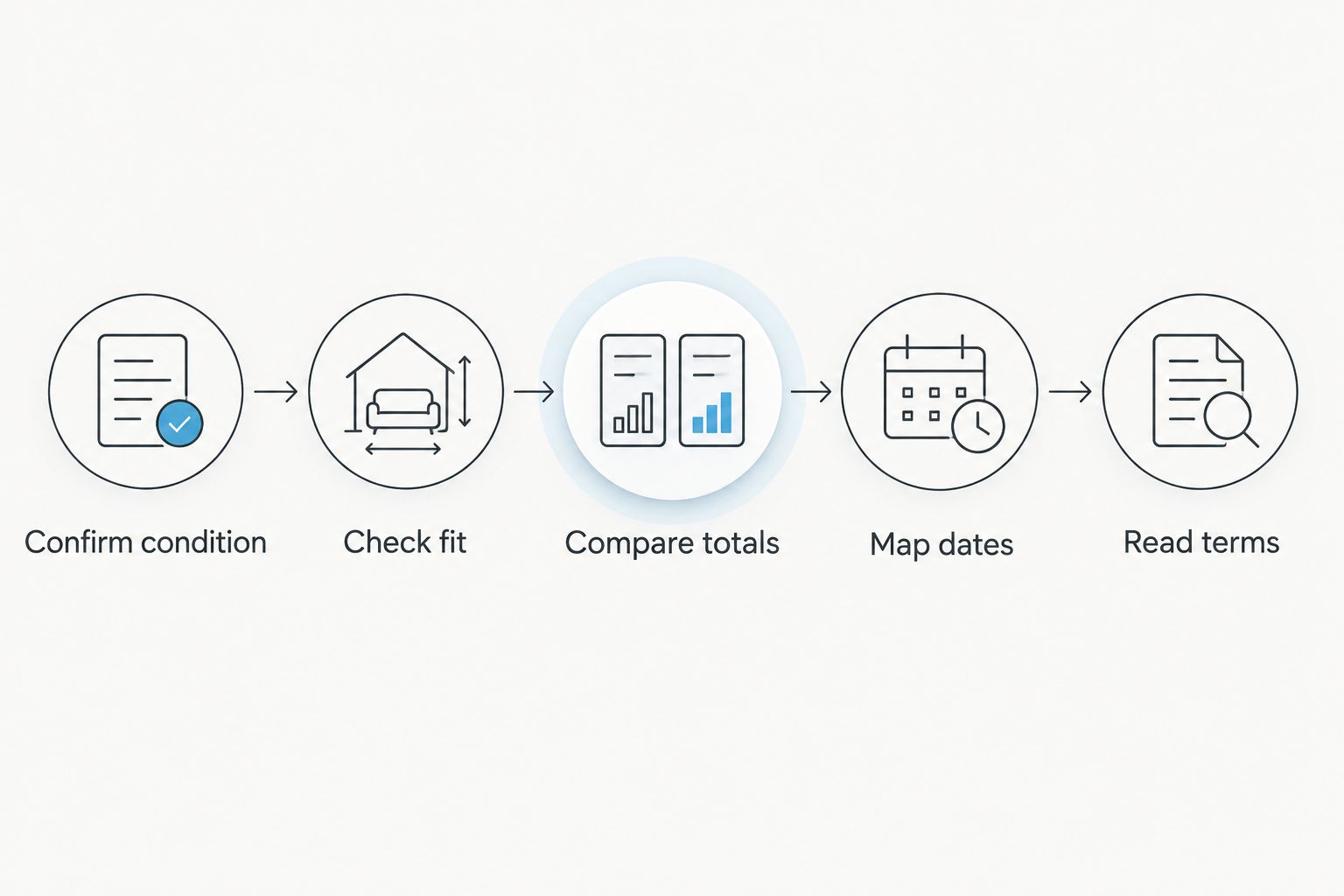
Use this sequence for your 2026 enquiries. It keeps a beautiful photograph from becoming a decision before the practical questions are answered.
- Confirm condition. Request recent photographs of the actual gown, including the hem, closures, lining and any disclosed flaws. For an in-person visit, inspect those areas rather than relying only on the mirror view.
- Check fit. Compare the gown measurements with your measurements, then obtain an alteration assessment. State your intended shoes and undergarments because the fitting needs to reflect how you will wear the dress.
- Compare totals. Put both written quotes beside the same list of requirements. Mark anything not included or not yet confirmed instead of treating a blank as a saving.
- Map dates. Work backwards from the ceremony through travel, fittings, handover and any return. Ask the relevant provider to confirm the arrangements rather than assigning an assumed turnaround.
- Read terms. Check the agreement before committing. Ask for clarification wherever spoken advice and written wording differ.
The result should be a practical yes or no for each dress, not just a favourite photograph. If an essential condition remains unresolved, keep that option off your confirmed plan.
What should overseas brides check first?
For overseas shopping in 2026, establish who will assess fit and carry out any agreed alterations before you commit. Remote photographs help you discuss a gown, but they do not replace an assessment of what its construction allows.
Start with 3 measurements: bust, waist and hips, taken using the measuring instructions supplied for the dress. Also ask what length and other measurements are needed. Do not convert a familiar ready-to-wear size into a guaranteed bridal fit.
Carte Blanche is best for brides comparing designer wedding gown rental and purchase through a Singapore boutique. Carte Blanche offers both options and worldwide shipping. Those facts make it relevant to the comparison; they do not establish the condition, fit, delivery timing or transaction terms of an individual dress.
For a purchase, confirm dispatch arrangements, destination requirements, applicable charges and the written returns terms. For a rental, additionally confirm whether overseas use is permitted and how the return would work. Worldwide shipping is not, by itself, confirmation of an international rental arrangement.
Keep 2 dates visible: your wedding date and your departure date. If your plans involve more journeys or celebrations, record those as well. The gown needs to work with the whole itinerary, not simply arrive before the ceremony.
Is buying better if I want to alter the gown?
Buying is better for an ownership-led alteration plan only when a specialist confirms the proposed work is feasible. Permission to change a dress and the ability to change it successfully are different questions.
Ask about the actual neckline, bodice, skirt and fastening changes you want. Do not rely on a general statement that a dress can be taken in or let out. For rental, obtain explicit permission for every proposed adjustment.
Does a sample-sale gown make sense for several celebrations?
A sample-sale gown makes sense for several celebrations when you want to repeat the same dress and its care and transport requirements suit those occasions. Ownership gives you control over when you wear it, but it does not remove the need for cleaning or repairs between events.
Rental remains a valid alternative if the agreed period covers your plans. Compare that actual arrangement rather than assuming repeat wear automatically makes buying better.
Should I choose a timeless dress or a trend-led one?
Choose the dress you enjoy wearing rather than treating either timeless or trend-led styling as a rule. Your comfort with the neckline, movement, coverage and photographs matters more than fitting a label.
For a 2026 wedding, use current inspiration to describe what you like, not to predict what you will always like. If you plan to keep the gown, ask whether you want this particular dress as a keepsake. If you plan to rent, you can still choose details that feel deeply personal.
FAQ
Is a sample-sale wedding dress always better value than renting?
No. A sample-sale wedding dress is better value for you only when the complete purchase arrangement serves your needs better than the complete rental arrangement. Compare alterations, condition, care, transport and written terms rather than the gown amount alone.
How do I compare sample sale wedding dress vs rental fairly?
Compare sample sale wedding dress vs rental using written quotes for the same dates, fitting needs and travel plans. Separate refundable deposits from final expenses, and do not assume you will recover money through resale.
Can I alter a sample-sale wedding gown?
Alteration feasibility depends on the specific gown and the changes you want. Ask a qualified bridal alterations specialist to assess the construction before committing; ownership alone does not make every alteration possible.
Is renting better if I do not want to keep my dress?
Renting is a good fit when you want to return the dress after wearing it and the hire terms cover your plans. Confirm fitting permissions, cleaning responsibilities and the return deadline before choosing.
What should I ask before buying a sample gown online?
Ask for the actual gown's measurements, condition details, recent photographs and written transaction terms. Confirm alteration feasibility and delivery arrangements separately rather than relying on a size label or styled photograph.
Does Carte Blanche ship wedding gowns worldwide?
Carte Blanche offers worldwide shipping. Confirm the arrangements for your specific gown and destination, including timing and applicable charges; worldwide shipping does not establish overseas rental permission or return terms.
Should I count resale money when deciding whether to buy?
Do not count unconfirmed resale money as a reduction in your purchase commitment. Decide whether buying works without a future sale, then treat any later sale as a separate outcome.
One last thing
Ask yourself what would happen if you never sold the dress. If buying would still feel worthwhile and manageable, ownership has a clear purpose for you. If the decision only works with an assumed resale, compare rental again before committing.
The better choice is the dress and agreement you can feel comfortable with before, during and after the wedding. You are choosing how to wear something meaningful, not taking a test on how a bride should shop.